
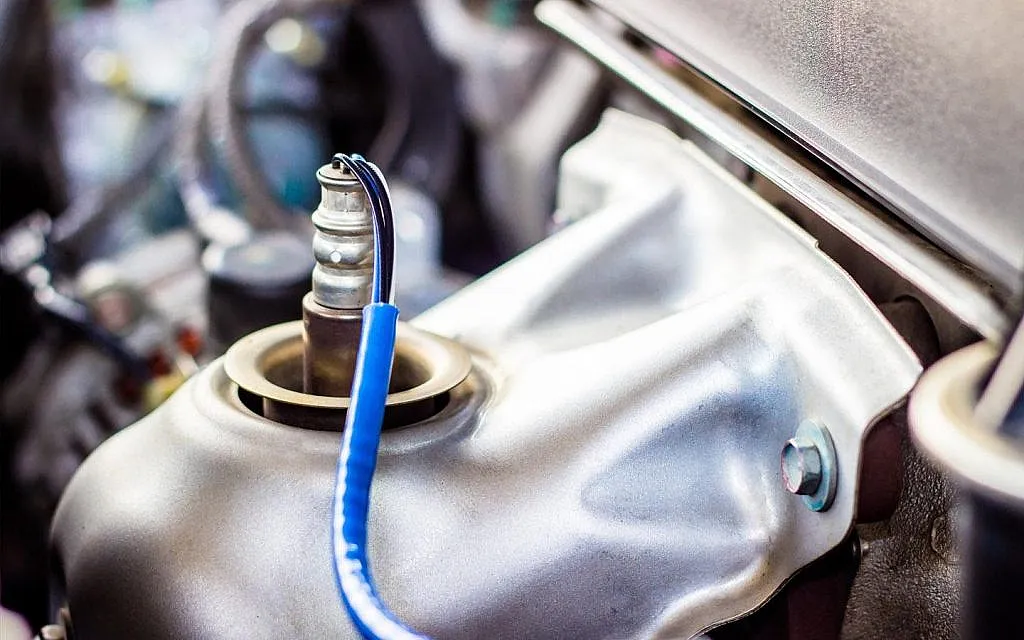
O2 Sensor Replacement in Virginia Beach
Check engine light, P0420 code, or bad fuel economy? Our ASE-certified technicians use live OBD-II data to confirm which oxygen sensor is actually failing before you spend a dollar - then install only OEM-quality sensors backed by a 12-month / 12,000-mile warranty.
- Live upstream & downstream sensor data
- Confirm sensor vs converter on every P0420
- OEM-quality Denso / NGK / Bosch sensors
- 12-month / 12,000-mile warranty
8 Signs Your O2 Sensor Is Failing
Catch a bad oxygen sensor early and you save the fuel economy, the catalytic converter, and the failed inspection.
Check Engine Light: P013x / P014x / P015x
What it means: OBD-II codes pointing directly at an O2 sensor circuit or heater.
Likely causes: Failed sensor element, broken heater circuit, wiring damage, exhaust leak nearby.
Why it matters: A bad sensor sends the ECU bad data, hurting fuel trim and triggering Virginia inspection failure.
Sudden Drop in MPG
What it means: Fuel economy dropping 10-25% with no other change.
Likely causes: Lazy upstream O2 sensor stuck rich, contaminated sensor, failed heater.
Why it matters: A slow O2 sensor is the #1 silent cause of bad gas mileage on modern vehicles.
Rough Idle or Hesitation
What it means: Engine surging, stumbling at stops, or hesitating under light throttle.
Likely causes: Fuel trims swinging because the O2 sensor can't keep up with combustion changes.
Why it matters: Bad sensor data forces the ECU into open-loop fuel control, ruining driveability.
P0420 / P0430 Catalyst Code
What it means: 'Catalyst System Efficiency Below Threshold' code stored.
Likely causes: Downstream O2 sensor reading incorrectly, NOT a failed catalytic converter.
Why it matters: Replacing a $200 sensor often fixes a P0420 and saves a $1,000+ converter bill.
Check Engine Light On Before Inspection
What it means: A stored O2 sensor code keeps the check engine light on going into your inspection.
Likely causes: Stored O2 sensor codes, incomplete monitors, sensor drift outside spec.
Why it matters: Virginia Beach is safety-only, so a lit check engine light does not by itself fail the state inspection, but the underlying fault still costs you fuel and can damage the converter.
Failed Heater Circuit (P0135 / P0141)
What it means: Heated O2 sensor circuit fault, often cold-start related.
Likely causes: Internal heater element burned out, blown fuse, broken wire, bad ground.
Why it matters: Without a working heater, the sensor never reaches operating temperature and never sets readiness.
Black Smoke or Fuel Smell
What it means: Strong gasoline smell, sooty tailpipe, or visible black exhaust.
Likely causes: Sensor reporting lean, causing the ECU to dump excess fuel.
Why it matters: Long-term rich running ruins the catalytic converter and the spark plugs.
Lazy or Slow O2 Sensor
What it means: No code yet, but the sensor switches too slowly on live data.
Likely causes: Sensor aging, oil/coolant contamination, silicone contamination from RTV.
Why it matters: A slow sensor still 'works,' but kills fuel economy and is the early sign of failure.
Is It the O2 Sensor or the Catalytic Converter?
A failing O2 sensor mimics a bad catalytic converter. Use this quick reference, then let us confirm with live data before you spend $1,000+ on the wrong part.
| Symptom | O2 Sensor | Catalytic Converter |
|---|---|---|
| P0420 / P0430 code | Likely first cause | Possible |
| P0130 / P0131 / P0132 | Yes - O2 sensor | No |
| P0135 / P0141 heater code | Yes - O2 sensor | No |
| MPG drop, no power loss | Likely | Possible |
| Rough idle / fuel trim swings | Likely | Rare |
| Rotten egg smell | Possible (rich) | Likely |
| Rattle from underneath | No | Likely |
| Loud roar from exhaust | No | Likely (theft/broken) |
This chart is a starting point, not a diagnosis. Schedule an O2 sensor diagnostic at our Virginia Beach shop to know for sure before replacing the wrong part.
Our 5-Step O2 Sensor Diagnostic
The same complete procedure on every sensor code, so you only pay for what's actually broken.
Full OBD-II Scan
Pull every stored and pending code, freeze-frame data, and readiness monitors with manufacturer-level scan tools.
Live Sensor Data
Watch upstream vs downstream O2 voltage, switch rate, and short/long-term fuel trims in real time.
Heater Circuit Test
Measure heater resistance, supply voltage, and ground to confirm a P0135 / P0141 is the sensor and not the wiring.
Exhaust Leak & Contamination Check
Inspect for exhaust leaks, oil burn, and coolant burn that destroy O2 sensors from the inside.
Digital Report & Honest Estimate
Photos, live data, and a written estimate sent to your phone before any work is approved.
Every O2 Sensor & Air-Fuel Service Under One Roof
From P0135 heater circuits to P0420 root-cause testing and wideband AFR sensors, we handle it all in one Virginia Beach shop.
Upstream O2 Sensor Replacement
Bank 1 / Bank 2 Sensor 1 - the fuel-trim sensor that controls combustion.
Downstream O2 Sensor Replacement
Bank 1 / Bank 2 Sensor 2 - monitors catalytic converter efficiency.
Heated O2 Sensor (Heater Circuit) Repair
P0135, P0141, P0155, P0161 diagnosis and repair.
Wideband / Air-Fuel Ratio Sensor Service
Toyota, Honda, Subaru, Ford, and European wideband sensor replacement.
O2 Sensor Wiring & Connector Repair
Rodent damage, melted connectors, broken pins, and chafed harnesses.
P0420 / P0430 Root-Cause Diagnosis
Confirm sensor vs converter before quoting an expensive cat replacement.
Exhaust Leak Repair
Pre-sensor exhaust leaks that throw false lean and rich codes.
Drive Cycle & Readiness Reset
Run the correct drive cycle so monitors complete for Virginia inspection.
Fuel Trim Analysis
Short and long-term fuel trim review to confirm sensor accuracy after install.
O2 Sensor Pricing in Virginia Beach
Honest starting prices. Final cost is confirmed in writing before any work begins.
- Full OBD-II scan + freeze frame data
- Live upstream & downstream sensor data
- Heater circuit & wiring inspection
- Diagnostic fee may apply toward repair
Prices shown are starting prices for most common vehicles. Final price depends on year/make/model, sensor location (upstream vs downstream), sensor type (standard vs wideband), and accessibility. Labor rate $175/hr.
Why Drivers Choose Us for O2 Sensor Service
Trusted by Hampton Roads drivers since 2010 for honest diagnostics and emissions repairs that pass Virginia inspection the first time.
ASE Certified Technicians
Trained in modern OBD-II, wideband, and OEM diagnostic procedures.
We Test Before We Replace
Live data and circuit testing confirm the sensor is bad before you pay for parts.
Virginia Emissions Specialists
We know exactly what passes (and what doesn't) at Virginia state inspection.
OEM-Quality Sensors
Denso, NGK, Bosch, and OEM sensors only. No cheap parts that fail next year.
Transparent Pricing
Written estimate before any work begins. No surprise add-ons.
Same-Day Service
Most O2 sensor jobs completed same day so you can pass inspection.
Saves You From Replacing the Cat
Most P0420 codes are a sensor, not a converter. We find out which - first.
12-Month / 12k Warranty
Workmanship and parts warranty on qualifying O2 sensor installations.
What Virginia Beach drivers say about our O2 sensor & emissions work
O2 Sensor Diagnosis & Replacement Near You
Beach Auto & Transmission Repair has been the trusted choice for oxygen sensor diagnosis, P0420 root-cause testing, and Virginia emissions work in Virginia Beach since 2010. Drivers come to our shop on Virginia Beach Boulevard every week with a check engine light, dropping fuel economy, or a failed state inspection - and they all get the same treatment: a real live-data diagnostic first, an honest recommendation second, and never a catalytic converter sold to fix a $295 sensor problem.
What an O2 sensor actually does
Your oxygen sensor lives in the exhaust and reads how much unburned oxygen is leaving the engine - hundreds of samples per second. The engine computer uses that signal to fine-tune fuel injection in real time. Upstream sensors (Sensor 1) control the air-fuel ratio. Downstream sensors (Sensor 2) sit behind the catalytic converter and monitor whether the cat is doing its job. When a sensor goes lazy or fails, fuel trims swing, MPG drops, the cat overheats, and the check engine light comes on.
How O2 sensor codes affect Virginia state inspection
A stored O2 sensor code (P0130-P0167 range) is not itself a Virginia State Safety Inspection rejection item, since the safety inspection does not check the check engine light. It does matter in localities with an OBD-II emissions program, where a stored code or a monitor that hasn't completed - "not ready" - causes a readiness failure. We diagnose, repair, clear codes, and run the proper drive cycle so monitors set to ready. Most customers go straight from our shop to their inspection station the same day.
The #1 mistake drivers make with a P0420 code
The single most expensive mistake we see is replacing a catalytic converter for a P0420 code that was actually caused by a failing downstream O2 sensor. The sensor is reading the cat's output incorrectly and the ECU thinks the cat is bad - when in reality the sensor is the problem. We test the downstream sensor with live data and switch-rate analysis before condemning the converter. If the sensor fixes it, you save $700-$1,500+ over an unnecessary cat replacement.
Heater circuit codes: P0135, P0141, P0155, P0161
Modern O2 sensors have a built-in heater so they reach operating temperature fast on cold starts. When the heater element fails or the circuit loses power, you get heater-circuit codes like P0135 (Bank 1 Sensor 1), P0141 (Bank 1 Sensor 2), P0155 (Bank 2 Sensor 1), or P0161 (Bank 2 Sensor 2). Sometimes the sensor is fine and a fuse, ground, or harness is the real fault. We test resistance, supply voltage, and ground before replacing anything.
OEM-quality sensors only. No cheap parts.
Beach Auto & Transmission Repair installs only OEM-quality oxygen sensors - Denso, NGK, Bosch, or original-equipment direct from the manufacturer. Cheap online sensors are the #1 source of repeat failures, slow response, and codes that come back within months. The few dollars saved on a no-name sensor always ends with a second diagnosis and a second labor charge. We use parts that last and back them with a 12-month / 12,000-mile warranty.
Wideband / air-fuel ratio sensors and European vehicles
Most vehicles built after roughly 2005 use wideband (air-fuel ratio) sensors upstream. They're more accurate, switch faster, and last longer than older narrow-band sensors - but they're also more expensive and require a manufacturer-level scan tool to clear adaptations after replacement. We service wideband sensors on Toyota, Honda, Subaru, Ford, GM, BMW, Mercedes, Audi, VW, MINI, Volvo, and Land Rover with the right tools and the right parts.
Areas we serve
We proudly serve drivers across Virginia Beach, Norfolk, Chesapeake, Portsmouth, and Suffolk, including the Kempsville, Lynnhaven, Pembroke, Hilltop, Town Center, Great Neck, Sandbridge, and Oceanfront neighborhoods. Whether you need an O2 sensor diagnosis, an upstream or downstream sensor replacement, heater circuit repair, or a P0420 root-cause workup, our ASE-certified technicians are ready to help. Call (757) 600-2095, walk in to 5564 Virginia Beach Blvd, or schedule online and get back on the road with a working emissions system.
O2 Sensor Questions
Real answers about O2 sensor codes, replacement cost, P0420 diagnosis, and Virginia State Safety Inspection failures.
More Emissions & Engine Services
Beach Auto & Transmission Repair handles every system that affects your vehicle's emissions, fuel economy, and Virginia state inspection readiness.
Check Engine Light
OBD-II scan and root-cause diagnosis of P0420 and other codes.
Catalytic Converter
EPA-compliant cat replacement, P0420 repair, and theft protection.
Muffler & Exhaust
Exhaust leak repair, muffler replacement, and flex pipe service.
Virginia State Inspection
Pass your Virginia State Safety Inspection in one visit.
Related services worth checking
Most repairs pair naturally with another service. Bundle them in one visit and save yourself a second trip.
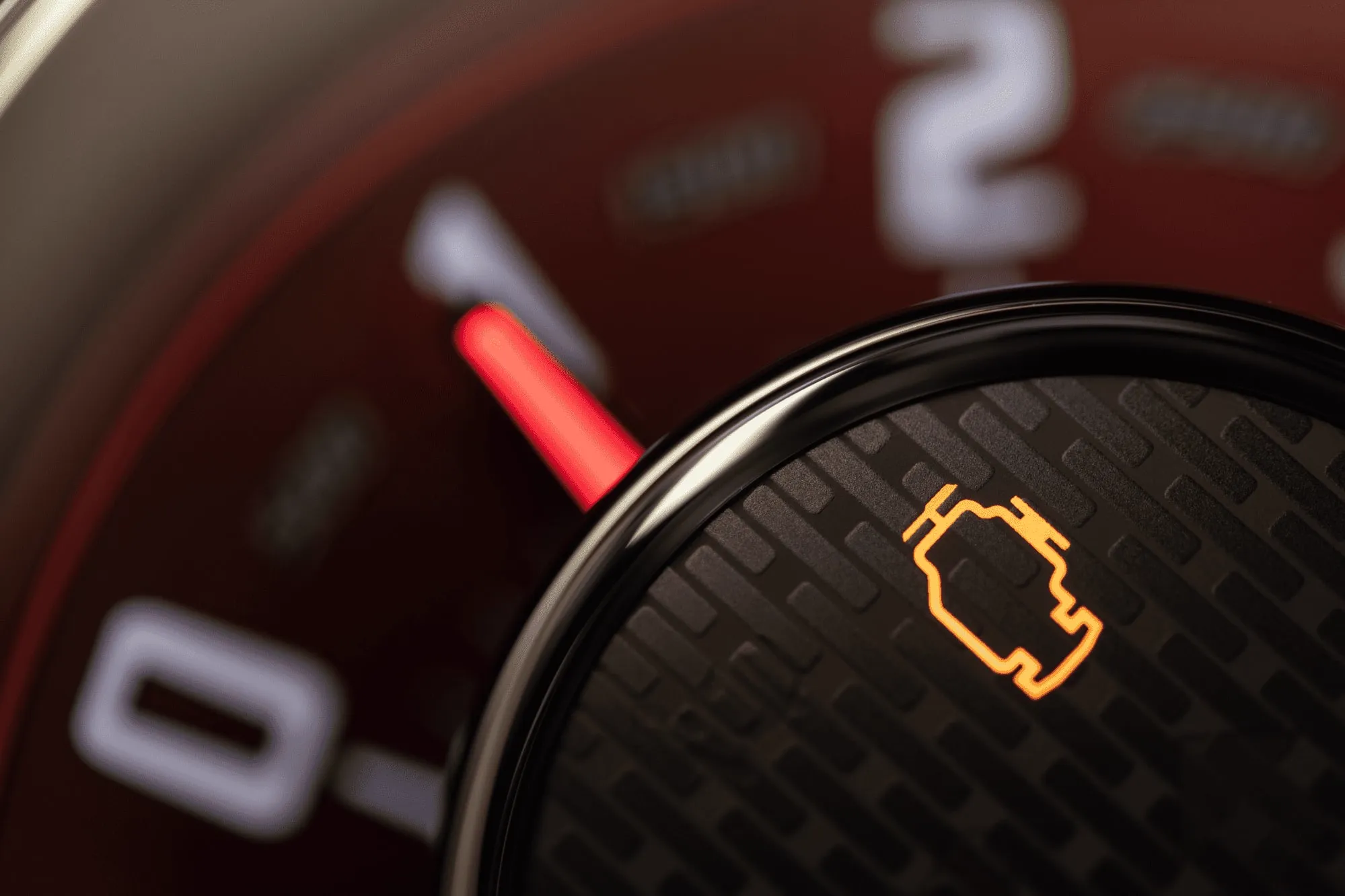
Check Engine Lights
Our Check Engine Light services are aimed at diagnosing and resolving issues related to the illumination of the check engine light in your vehicle, ensuring your vehicle's engine and emissions systems are operating correctly.
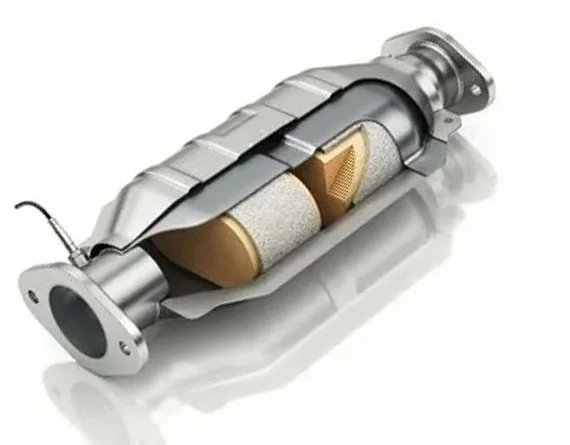
Catalytic Converter
Our Catalytic Converter services are essential for the maintenance and repair of the catalytic converter in your vehicle, a crucial component that helps reduce harmful emissions by converting pollutants into less harmful substances.
Tune Up & General Maintenance
Our Tune Up services are dedicated to fine-tuning and maintaining your vehicle's engine, ignition, and fuel systems, ensuring optimal performance, fuel efficiency, and overall reliability.