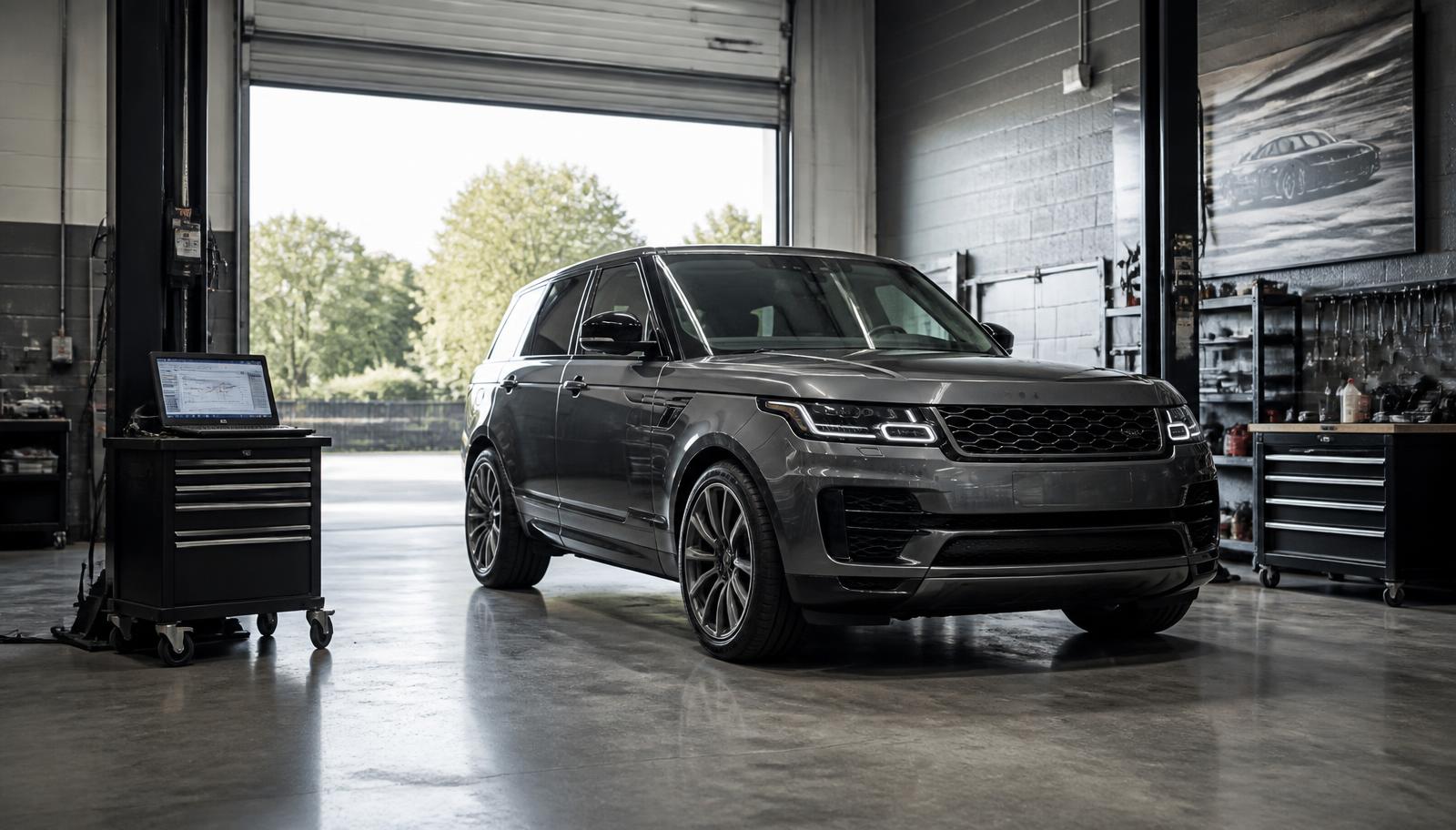
Advanced diagnostics, maintenance and major repairs for Land Rover and Range Rover vehicles. From warning lights and air suspension problems to cooling-system failures, electrical issues and engine repairs, our diagnostic-first approach determines what your vehicle actually needs before expensive parts are recommended.
Independent service. Not affiliated with or endorsed by Jaguar Land Rover.
Land Rover repair requires more than basic diagnostics
Modern Land Rover and Range Rover vehicles combine sophisticated engine management, dozens of networked electronic control modules, air suspension, terrain response systems, demanding cooling systems, turbocharged and supercharged engines, full-time AWD and 4WD hardware, and advanced safety electronics. A single fault in one of those systems can display as several unrelated warning messages.
That is why a code reader alone is not a diagnosis. We verify the symptom, read the modules that actually govern the system involved, look at live data, and test the circuit or component before anything is quoted. On these vehicles the parts are expensive enough that guessing is the most costly approach available.
Diagnose first. Repair what is necessary. That is how every Land Rover and Range Rover leaves our Virginia Beach shop.
Land Rover services
What we diagnose, service and repair
Every service below is performed at our Virginia Beach shop by ASE-certified technicians. Follow any card for full details on that repair.
Common Land Rover & Range Rover problems we diagnose
Not every Land Rover develops these concerns, but these are the symptoms owners most often bring to us. Each one has several possible causes, which is exactly why testing comes before parts.
Air Suspension Warning or Vehicle Sitting Low
What you may notice: A suspension fault message, the vehicle sitting low on one corner, or the ride height dropping overnight.
Possible causes
Leaking air spring or air strut
Worn or overworked compressor
Valve block or air line leak
Failed height sensor or electrical fault
The compressor, springs and control system all produce similar symptoms. Testing tells us which one is actually at fault before a costly part goes on the car.
Suspension Will Not Raise
What you may notice: The vehicle refuses to lift to normal or off-road height, or stays in a limp ride-height mode.
Possible causes
Compressor unable to build pressure
System locked out by a stored fault
Height sensor reading out of range
Air leak preventing the system from holding
A lockout is often the system protecting itself. Reading the suspension module and testing pressure identifies the trigger instead of masking it.
Coolant Leak
What you may notice: Low coolant messages, sweet smell after driving, or pink or orange residue under the front of the vehicle.
Possible causes
Failing water pump or thermostat housing
Cracked expansion tank
Hose, clamp or radiator seepage
Gasket or coolant crossover leak
Small coolant losses are cheap to fix and very expensive to ignore. Pressure testing finds the source before it becomes an overheating event.
Engine Overheating
What you may notice: Rising temperature gauge, overheating warning, steam, or heat that climbs while sitting in traffic.
Possible causes
Coolant loss from a leak
Thermostat stuck closed
Water pump or cooling fan failure
Restricted radiator or airflow
Continuing to drive can turn a cooling-system repair into major engine damage. Stop, let it cool, and have it diagnosed.
Check Engine Light
What you may notice: A steady or flashing check engine light, sometimes with reduced power or a rough running engine.
Possible causes
Misfire from ignition or fuel delivery
Sensor or emissions system fault
Boost, intake or exhaust leak
Related cooling or electrical problem
A code points to a circuit, not a part. We test the system the code names before recommending replacement.
Oil Leak
What you may notice: Oil spots on the driveway, burning oil smell, or low oil level between services.
Possible causes
Valve cover or cam cover gaskets
Oil cooler or filter housing seals
Rear main or front crank seal
Oil pan gasket or sensor seals
Several leak points can look identical from below. Cleaning, dye testing and re-inspection confirm the real source.
Engine Misfire
What you may notice: Shaking at idle, stumbling on acceleration, or a flashing check engine light.
Possible causes
Ignition coils or spark plugs
Fuel injector concerns
Vacuum or intake leak
Mechanical or compression issue
A flashing light means raw fuel is reaching the catalytic converter. Prompt diagnosis protects expensive downstream components.
Loss of Power
What you may notice: Sluggish acceleration, a restricted performance message, or the vehicle entering a reduced-power mode.
Possible causes
Turbocharger or supercharger related fault
Boost or intake leak
Sensor data outside expected range
Exhaust restriction or fuel delivery concern
Reduced power is a protection strategy with many possible triggers. Live data testing shows which system asked for it.
Electrical Problems and Warning Messages
What you may notice: Multiple warning messages at once, features that stop working, or faults that come and go.
Possible causes
Module communication or network fault
Low system voltage
Corroded connector or damaged wiring
Failing sensor or ground circuit
On a networked vehicle one weak circuit can light up several unrelated warnings. Systematic testing prevents replacing healthy modules.
Battery Drain or Charging Problems
What you may notice: Dead battery after sitting, repeated jump starts, slow cranking, or a charging warning.
Possible causes
Parasitic draw from a module staying awake
Alternator or charging circuit fault
Battery at end of service life
Cable, ground or fuse box corrosion
Replacing the battery rarely fixes a draw. Measuring current over time identifies the circuit keeping the vehicle awake.
Transmission Shifting Problems
What you may notice: Hard, delayed or erratic shifts, a transmission fault message, or gearbox limp mode.
Possible causes
Fluid condition or level concerns
Valve body or solenoid faults
Electrical or sensor input problems
Internal wear in higher-mileage units
Not every shifting complaint means replacement. Scanning transmission data and checking fluid comes first.
Transfer Case or AWD Problems
What you may notice: Binding in turns, driveline noise, a terrain response or 4WD fault message, or vibration under load.
Possible causes
Transfer case actuator or motor fault
Fluid condition in transfer case or differentials
Driveshaft, U-joint or carrier bearing wear
Mismatched or unevenly worn tires
AWD complaints often trace back to something simple like tire wear. Confirming that first can save a major repair.
Steering or Suspension Noise
What you may notice: Clunks over bumps, a wandering feel, uneven tire wear, or a groan when turning.
Possible causes
Worn bushings, ball joints or control arms
Sway bar links or wheel bearings
Steering rack or linkage wear
Alignment out of specification
A road test plus a lift inspection separates a ten-dollar bushing from a major suspension job.
AC Not Blowing Cold
What you may notice: Warm air, cold on one side only, weak airflow, or cooling that fades on hot days.
Possible causes
Refrigerant leak in the system
Compressor or clutch circuit fault
Condenser or cooling fan problem
Blend door or climate module fault
Adding refrigerant without finding the leak is a temporary fix. Leak testing gives a lasting repair.
Seeing something that is not listed? Call us with your year, model and a description of the concern and we will tell you what diagnosis will involve.
Air suspension
Land Rover & Range Rover air suspension diagnostics and repair
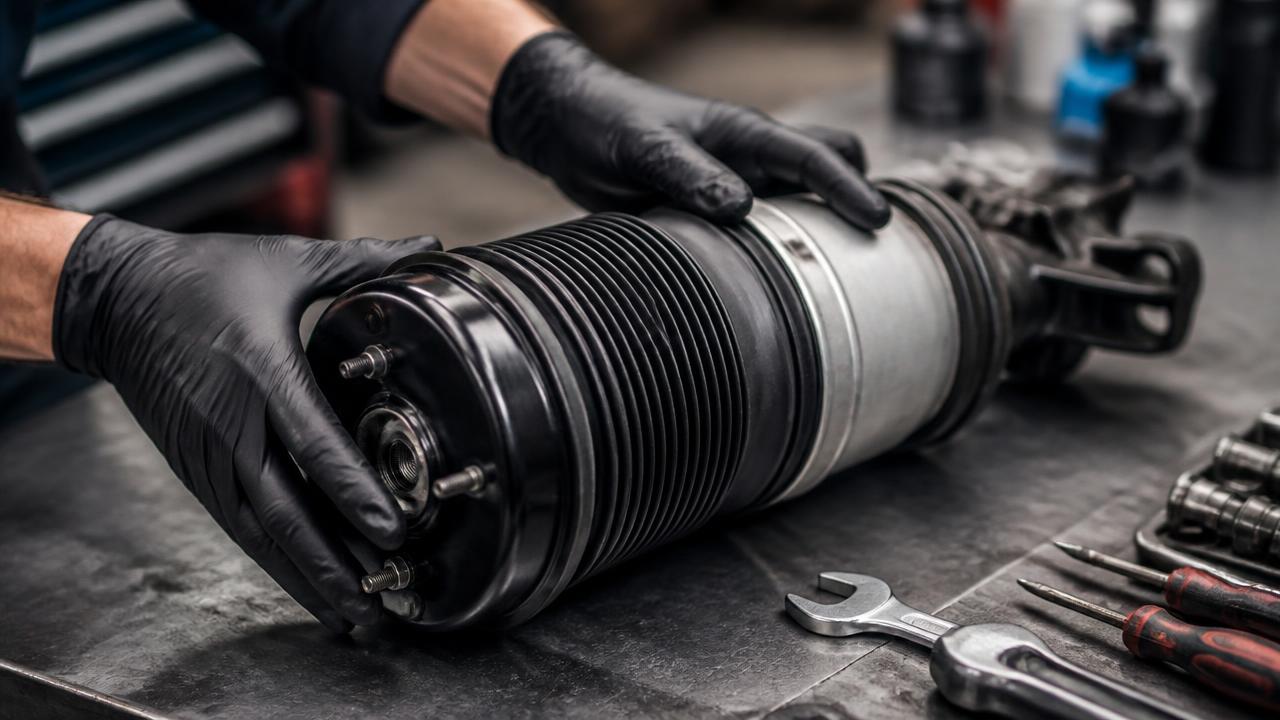
Air suspension is one of the defining features of these vehicles and one of the most common reasons owners call us. Symptoms include the vehicle leaning, one corner sitting low, the ride height dropping overnight, suspension warning messages, the suspension refusing to raise, the compressor running excessively, or a ride height that simply feels wrong.
Those symptoms overlap heavily. An air spring leak, a tired compressor and a faulty height sensor can all present the same way from the driver's seat, and the control system may lock the suspension out to protect itself either way. We test the system rather than replacing the most obvious part.
Overheating is the one symptom that should never wait. These engines run tightly packaged cooling systems, and a small coolant loss can escalate quickly into warped or cracked components that cost many times more than the original repair.
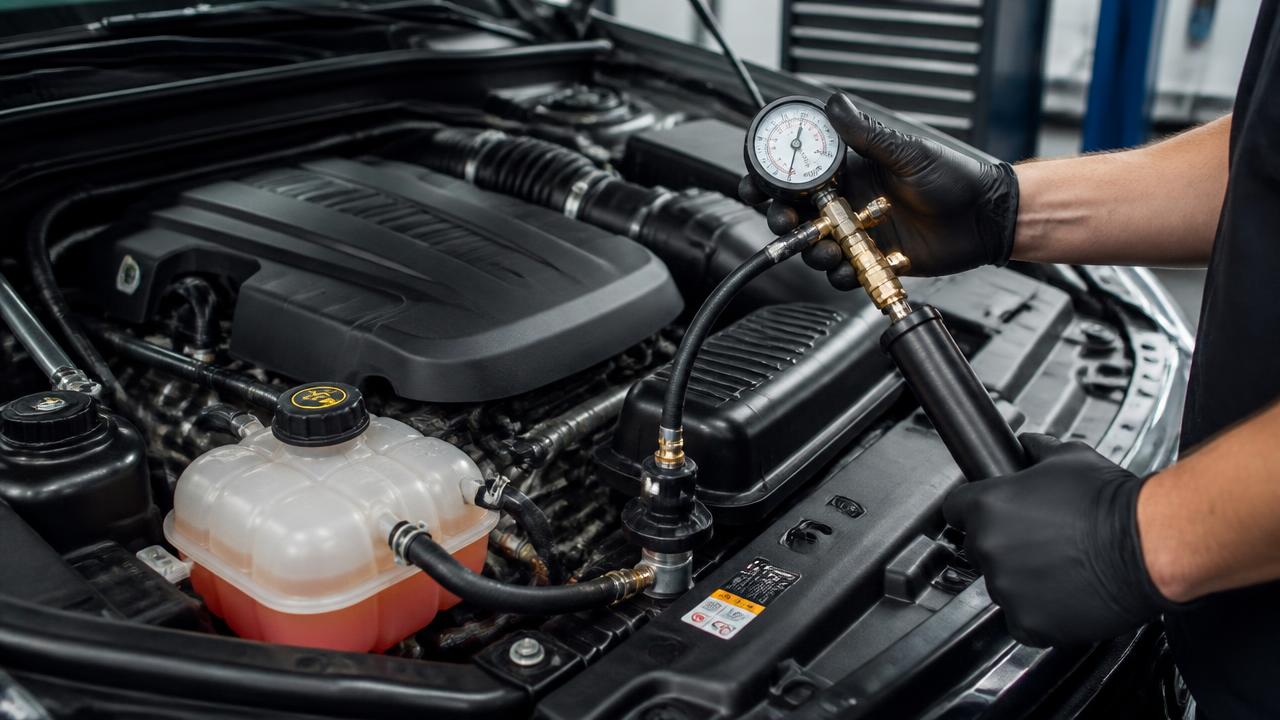
We pressure test the system, inspect for leaks, and check the parts that commonly cause the problem: coolant leaks at hoses and fittings, water pumps, thermostats and housings, radiators, expansion tanks, and cooling fan operation. Where a cooling failure has already affected the engine, we tell you plainly what the inspection found.
What we inspect and repair
Coolant leaks and pressure testing
Water pumps
Thermostats and housings
Radiators
Coolant hoses and fittings
Expansion tanks and caps
Cooling fans and control circuits
Related engine damage assessment
Land Rover overheating?
Do not continue driving an overheating vehicle. Continuing to operate the engine can turn a cooling-system repair into major engine damage. Pull over safely, shut it off, and call us at (757) 600-2095.
Engine repair
Land Rover & Range Rover engine repair
Get answers before you spend thousands. A warning light, a misfire, a noise or a drivability complaint does not automatically mean the engine needs replacement, and we will not tell you it does until testing supports it.
We handle check engine light diagnostics, misfire testing, oil leak identification, cooling-related engine problems, timing system concerns, turbocharger and supercharger related diagnosis where applicable, loss-of-power complaints and internal engine diagnostics. When repair is the answer, we repair. When replacement is genuinely the better economic decision, we explain why and what it involves.
Modern Land Rovers contain numerous interconnected electronic modules communicating across a shared network. When one circuit is weak or one module drops off the network, the dash can light up with warnings that have nothing to do with the actual fault. Systematic diagnostics matter more here than almost anywhere else on the vehicle.
We test warning messages, parasitic battery drain, no-start conditions, charging system problems, module communication faults, sensor and wiring issues, and the intermittent electrical faults that are hardest to catch. Where a fault only appears under certain conditions, we say so honestly and plan the testing around it.
Shifting complaints on these vehicles range from a fluid service to a genuine internal repair, and the symptoms alone will not tell you which. We scan the transmission and drivetrain modules, review live data, check fluid condition and road test the vehicle before making a recommendation.
Not every transmission symptom means replacement. Plenty of hard-shift and warning-message complaints trace back to fluid condition, an electrical input or a solenoid, and we would rather find that than sell you a gearbox you do not need.
Preventive maintenance is worth more on a complex luxury SUV than on almost anything else on the road. Clean fluids, healthy cooling systems and caught-early leaks are the difference between predictable ownership costs and a surprise repair bill.
Maintenance requirements vary by model, engine, year, mileage and the manufacturer's schedule, so we do not quote universal intervals. Tell us your vehicle and we will confirm what is actually due, perform it properly, and note anything the inspection turns up.
Maintenance we perform
Oil and filter service
Brake inspection and brake fluid service
Cooling system inspection and coolant service when required
Transmission and drivetrain fluid service when applicable
Battery and charging system testing
Tire rotation and tire condition checks
Suspension and steering inspection
Engine and cabin air filters
Belts, hoses and fluid leak inspection
Manufacturer-recommended maintenance for your model
Current and legacy models, from the newest Defender to the LR-series SUVs still earning their keep around Hampton Roads.
Range Rover
Range Rover Sport
Range Rover Velar
Range Rover Evoque
Defender
Discovery
Discovery Sport
LR2
LR3
LR4
Freelander
Older Land Rover models
Don't see your Land Rover listed? Contact Beach Auto & Transmission Repair with your year, model, engine and service concern.
Independent service
An independent alternative for Land Rover service in Virginia Beach
Land Rover owners have options. Dealerships do good work, and so do independent shops, and choosing where your vehicle is serviced is entirely up to you. What we offer is a different relationship with the shop working on it.
You talk to the people who see your vehicle. You get advanced diagnostics before parts are recommended, a written estimate in language that makes sense, and your explicit approval required before any repair begins. We handle maintenance and major repair work alike, and we are locally owned right here in Virginia Beach.
Beach Auto & Transmission Repair is an independent repair facility. We are not affiliated with, authorized by, or endorsed by Jaguar Land Rover.
What that looks like in practice
Personalized communication
Advanced diagnostics before parts
Transparent, written recommendations
Major repair capability in house
Routine and manufacturer-recommended maintenance
Local ownership and accountability
Your authorization before any repair
Is your Land Rover worth repairing?
If you are holding a major repair estimate for an older Range Rover or Discovery, this is a fair question and it deserves a straight answer rather than a sales pitch.
The honest answer depends on the specific vehicle in front of us. We will tell you what the repair costs, what condition the rest of the vehicle is in, and what else is likely to come due. Our job is to help you make an informed economic decision, not to steer you toward the most expensive work available.
What the decision depends on
Vehicle age and mileage
Overall mechanical condition
Current market value
Cost of the repair in front of you
Maintenance history
Other repairs likely in the next year
How long you plan to keep the vehicle
How a Land Rover repair works here
A consistent five-step process, from the moment you describe the concern to the road test before pickup.
1
Describe the Concern
Tell us what the vehicle is doing, when it happens, and any warning messages on the display.
2
Diagnosis
We verify the symptom, scan the relevant modules, and test the system rather than replacing parts on a hunch.
3
Recommendations
You get a written estimate separating what needs attention now from what can safely wait.
4
Your Authorization
Nothing is repaired until you approve it. No surprise work, no pressure.
5
Quality Check
A final inspection and road test confirm the repair before the vehicle is returned to you.
Why Land Rover owners choose Beach Auto & Transmission Repair
Advanced diagnostics
Professional scan tools and systematic testing on engine, suspension, transmission and electrical systems.
Complex repair capability
Engine, transmission, cooling system, suspension and electrical work handled in house.
Transparent estimates
Written recommendations in plain language, with your authorization required before any repair begins.
Local ownership
A Virginia Beach shop serving Hampton Roads drivers since 2010, with the same technicians every visit.
Parts options for your Land Rover
Depending on the repair, your model year and parts availability, several options may be available. We explain the trade-offs and let you choose.
OEM Parts
Genuine factory components for systems where fit, calibration or software matching leaves no room for substitutes.
OEM-Equivalent Parts
Components built to the original specification, often by the same suppliers, at a lower cost than dealer packaging.
Quality Aftermarket Parts
For some repairs a well-engineered aftermarket option is the sensible choice. We explain the trade-offs and let you decide.
Availability varies by repair and model. We confirm which parts are being used on your written estimate before work begins.
ASE-Certified Technicians
The same experienced team on every visit, with professional-level scan tools.
Clear Communication
You hear what we found, what it means, and what your options cost before work starts.
36-Month / 36,000-Mile Warranty
Parts and labor covered on qualifying repairs, nationwide.
Rated 4.7 out of 5 across 581+ Google reviews.
Land Rovers we've serviced
Real repairs from our own bays, documented with the concern, what diagnosis found, and what it took to fix. We only publish work we have actually performed.
We are photographing and documenting Land Rover and Range Rover repairs as they come through the shop, and this section will fill with real examples: year, model, mileage, the customer's complaint, our diagnostic findings, the repair performed and the result. Until those write-ups are published here, our verified Google reviews are the most accurate picture of the work we do.
Trusted by Virginia Beach drivers
Real 5-star Google reviews from local drivers.
Land Rover & Range Rover repair questions, answered
Yes. Beach Auto & Transmission Repair services Land Rover vehicles at our Virginia Beach shop on Virginia Beach Boulevard, covering diagnostics, maintenance and major repairs.
Yes. We service Range Rover, Range Rover Sport, Velar and Evoque models, along with Defender, Discovery, Discovery Sport and older LR-series vehicles.
No. Land Rover owners are free to have maintenance and repairs performed at an independent shop. Beach Auto & Transmission Repair is an independent alternative and is not affiliated with or endorsed by Jaguar Land Rover.
A vehicle sitting low usually means the air suspension is losing pressure or has been locked out by a stored fault. Common causes include a leaking air spring or strut, a compressor that can no longer keep up, a valve block or air line leak, or a height sensor problem. Testing identifies which before parts are replaced.
A suspension fault message means the suspension control system detected a reading or pressure outside its expected range. We read the suspension module, test system pressure and check the height sensors and compressor circuit to find the cause.
Coolant leaks commonly come from the water pump, thermostat housing, expansion tank, hoses or radiator. A cooling system pressure test locates the source so it can be repaired before it causes overheating.
No. Continuing to drive an overheating engine can turn a cooling-system repair into major engine damage. Pull over safely, shut the engine off, let it cool and have the vehicle towed or brought in for diagnosis.
A check engine light can come from a misfire, a sensor or emissions fault, a boost or intake leak, or a related cooling or electrical problem. We read the stored codes and live data, then test the system involved before recommending a repair.
Yes. We diagnose battery drain, charging problems, no-start conditions, warning messages, module communication faults and intermittent wiring issues using systematic electrical testing.
Yes. We handle misfires, oil leaks, cooling-related engine problems, timing system concerns and internal engine diagnostics and repair on Land Rover and Range Rover vehicles.
Engine replacement is performed when diagnosis shows it is the right answer and the cost makes sense for your vehicle. A warning light, misfire or noise does not automatically mean the engine needs replacing, which is why we diagnose first.
Yes. We diagnose shift-quality complaints and transmission fault messages, perform fluid service where applicable, and carry out repair or replacement when the unit requires it.
Yes. We perform manufacturer-recommended maintenance including oil and filter service, fluids, filters, brake service and inspections. Intervals vary by model, engine, year and mileage, so we confirm the schedule for your specific vehicle.
Cost depends on the model, the system involved and what diagnosis finds. We provide a written estimate before any repair begins and you approve the work before it starts. Call us at (757) 600-2095 with your year, model and concern for a clearer idea.
Yes. We service older Land Rover and Range Rover vehicles including LR2, LR3, LR4, Freelander and earlier Range Rover models, subject to parts availability for the specific repair.
Yes. Range Rover Sport diagnostics, air suspension work, cooling-system repair, engine and drivetrain service and routine maintenance are all performed at our shop.
Yes. We service current-generation Defender models for maintenance, diagnostics and repair, and we can advise on older Defenders based on the specific concern and parts availability.
Yes. Discovery and Discovery Sport vehicles are serviced for maintenance, electrical and engine diagnostics, cooling system repair, suspension work and drivetrain concerns.
Yes. We are a Virginia State Inspection station and can inspect your Land Rover or Range Rover while it is with us for other work.
Yes. We offer early drop-off using the key drop box at the front sales building, so you can leave the vehicle at a time that fits your schedule.
Land Rover and Range Rover service across Hampton Roads
Our shop sits on Virginia Beach Boulevard, minutes from Town Center, Hilltop, Kempsville and Lynnhaven, and an easy drive from Norfolk, Chesapeake, Portsmouth and Suffolk. Coastal humidity and salt air are hard on cooling systems, electrical connectors and suspension components, which is a large part of why local Land Rover and Range Rover owners end up here for diagnostics and repair.
Virginia Beach
Hilltop
Town Center
Kempsville
Great Neck
Lynnhaven
Norfolk
Chesapeake
Portsmouth
Suffolk
Beach Auto & Transmission Repair5564 Virginia Beach BlvdVirginia Beach, VA 23462
From routine maintenance to difficult electrical, suspension, cooling-system, engine and drivetrain problems, Beach Auto & Transmission Repair is ready to help keep your Land Rover performing at its best.