
Technical guide
Vehicle Frame Damage, Frame Restoration & Undercoating: What Virginia Beach Drivers Should Know
Your vehicle can look excellent from the outside while serious corrosion develops underneath.
Learn how frame rust develops, how body-on-frame and unibody vehicles differ, when corrosion can potentially be repaired, when restoration makes sense, and how proper undercoating can help protect your vehicle.
Quick answer
Is frame rust repairable?
Sometimes.
Surface corrosion, localized deterioration, and severe structural corrosion are very different conditions.
The location, depth, extent, vehicle design, and condition of critical mounting points must be inspected before determining whether treatment, repair, restoration, or vehicle replacement makes sense.
Vehicle construction
Body-on-frame vs unibody
How a vehicle is built determines where corrosion matters most and how it is inspected. These are two different structures with two different failure patterns.
Body-on-frame
A separate ladder-type frame carries the drivetrain and suspension, and the body bolts on top of it through rubber body mounts. Common on pickup trucks and large SUVs.
Critical areas
- Frame rails
- Crossmembers
- Body mounts
- Suspension mounts
Unibody
The body and structural sections work together as a single assembly. There is no separate frame to inspect, so structural condition is spread across the floor, rockers, and mounting structures. Common on cars and crossovers.
Critical areas
- Structural rails
- Rocker structures
- Floor structure
- Strut towers
- Subframe mounts
- Suspension mounting points
Practical difference: on a body-on-frame truck, a corroded body mount can be a localized repair. On a unibody vehicle, the same corrosion in a rocker or floor structure affects the structure itself, so the evaluation is stricter.
Progression
The four levels of vehicle rust
Not all rust means the same thing. Understanding which stage you are looking at is the difference between a note in your service history and a structural conversation.
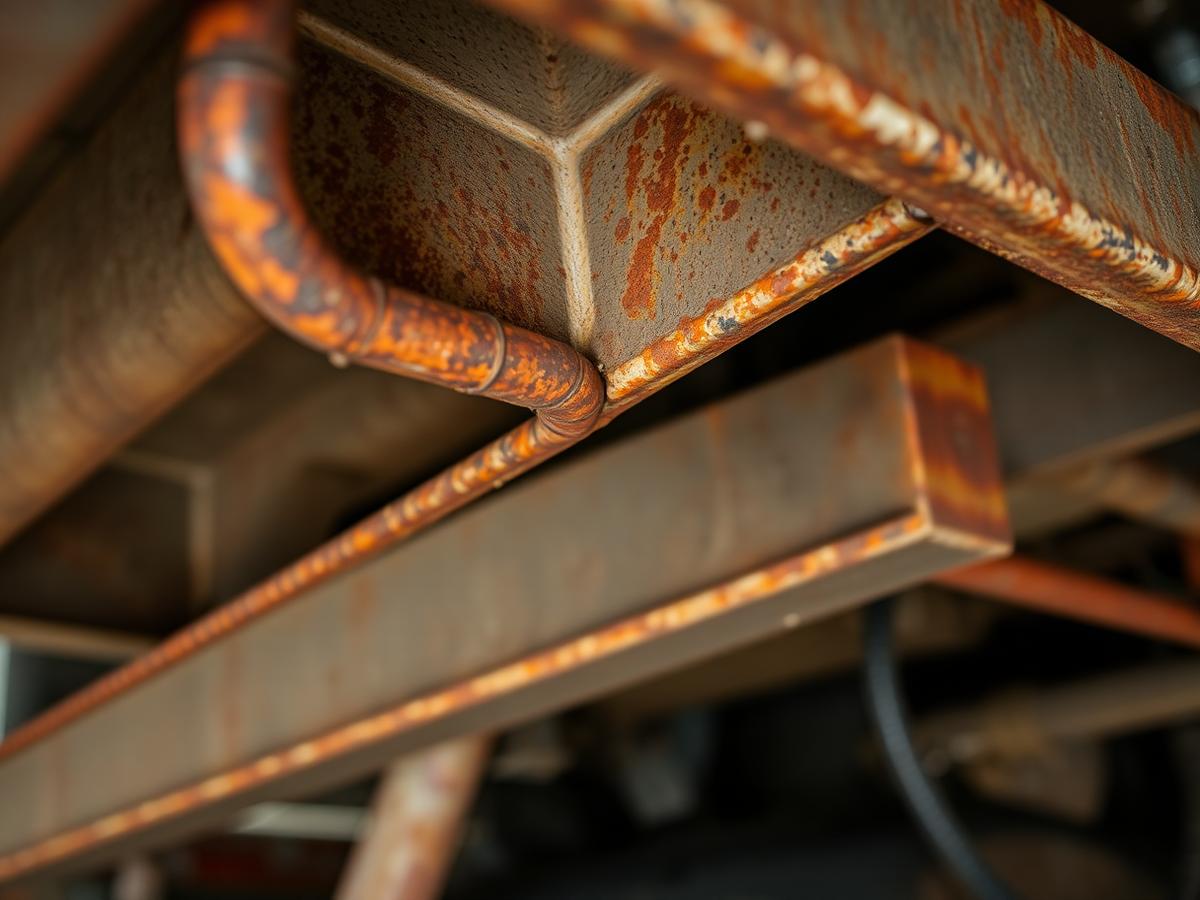
Surface Rust
- What it looks like
- A light orange or brown film on bare steel, usually where paint or factory coating has worn away.
- What it means
- The metal underneath is generally still solid. This is oxidation on the outer layer only.
- Typical next step
- Document it, clean and treat the area, and keep an eye on it at each service visit.
Scaling and Flaking Corrosion
- What it looks like
- Rough, layered rust that lifts away in flakes. Tapping it produces loose debris rather than a solid ring.
- What it means
- Corrosion has begun consuming metal thickness. The remaining wall thickness is no longer the original spec.
- Typical next step
- Mechanical cleaning, thickness assessment, and a decision about treatment versus repair.
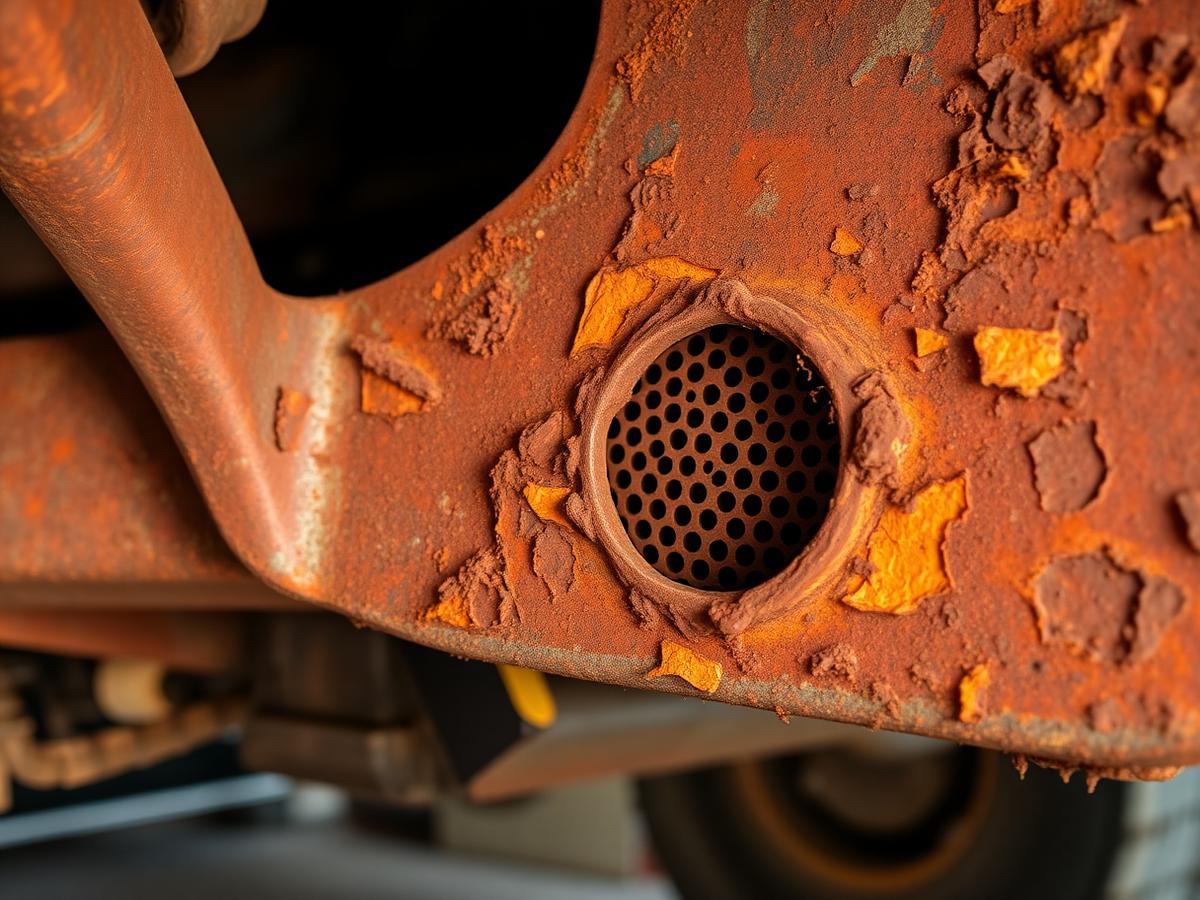
Perforation
- What it looks like
- Holes through the metal, often starting inside boxed sections and working outward.
- What it means
- Metal has been lost completely in that area. What you can see is usually smaller than what is actually gone.
- Typical next step
- Detailed inspection of surrounding metal to map the true extent before any repair is quoted.
Structural Corrosion
- What it looks like
- Deterioration at frame rails, crossmembers, body mounts, subframe mounts, or suspension mounting points.
- What it means
- Corrosion is affecting areas that carry load or locate suspension and body components.
- Typical next step
- Honest evaluation. Some vehicles are repairable. Some are not worth further investment.
Causes
Why vehicles rust
Corrosion needs moisture, oxygen, and time. Living in Virginia Beach supplies the first two in abundance, and salt speeds everything up.
Coastal Salt Air and Humidity
Hampton Roads sits on the water. Salt-laden humid air keeps underbody metal damp far longer than it stays damp inland, and moisture is what turns a scratch into corrosion.
Road Salt and Brine
Winter treatments cling to the underbody and reactivate every time the metal gets wet. Vehicles driven north in winter often arrive here with a head start on corrosion.
Floodwater and Tidal Flooding
Standing water, especially brackish water, reaches cavities that never fully dry. See our flood and water damage service page for what that inspection involves.
Mud and Trapped Moisture
Packed mud, leaves, and debris in boxed frame sections and behind splash shields hold water directly against bare metal for weeks.
Age and Coating Failure
Factory e-coat and wax layers wear thin with mileage, stone chips, and heat cycling. Once the coating is compromised, corrosion starts at the edge.
Previous Repairs and Drilling
Aftermarket accessory installs, welds, and drilled holes break through protective coatings. Untreated repair areas are a common corrosion starting point.
Structural damage
Frame damage is not always rust
Structural problems also come from impact and load. These vehicles often have no visible corrosion at all.
Common causes
- Collision impact, including low-speed hits that appear cosmetic
- Deep potholes and hard curb strikes
- Off-road use and repeated undercarriage contact
- Improper towing or lifting at points not designed to carry load
- Sustained overloading beyond the vehicle rating
- Previous repairs performed without proper measurement or correct materials
Warning signs worth checking
- Uneven tire wear that returns shortly after an alignment
- A steering wheel that is off-center when driving straight
- Doors, hood, or tailgate that no longer line up or latch the same way
- New clunks, creaks, or shifting sounds over bumps
- Alignment specifications that cannot be brought into range
- Visible ripples, kinks, or fresh cracks in paint or undercoating along a rail
Several of these overlap with worn suspension and steering components, which is exactly why the underbody should be inspected before parts are replaced.
The real question
Can a rusted frame be repaired?
There is no universal answer, and anyone giving you one over the phone is guessing. The decision comes down to eight factors.
Location
Corrosion on a non-loaded bracket is a different conversation than corrosion at a body mount or suspension pickup point.
Severity
Surface oxidation, scaling, and perforation each require a different response.
Remaining metal
What matters is how much sound metal is left, not how much rust you can see.
Structural importance
Some sections carry load and locate components. Those areas set the bar much higher.
Vehicle value
Repair cost has to make sense against what the vehicle is worth and how long you plan to keep it.
Access
Sections buried behind fuel tanks, brake and fuel lines, or exhaust require significant disassembly.
Parts availability
Some crossmembers and structural components are still available. Many are not.
Overall condition
A solid drivetrain and clean interior change the math. A tired vehicle with corrosion everywhere usually does not.
Not every rusted vehicle should be restored
Sometimes the responsible recommendation is not to invest additional money in a severely deteriorated vehicle. We would rather show you photos of what we found and explain why we are declining the work than take payment for repairs that do not change the underlying condition.
Comparison
Frame repair vs frame restoration vs corrosion protection
Three different scopes of work that often get grouped together under the word rustproofing.
| Approach | When it applies | What it involves | Best fit |
|---|---|---|---|
| Repair | Localized deterioration in a section that can be accessed, cleaned, and properly addressed. | Targeted cleaning, evaluation of surrounding metal, sectional work where appropriate, then protection of the repaired area. | Vehicles that are otherwise sound with corrosion limited to identifiable areas. |
| Restoration | Multiple areas affected on a vehicle worth the long-term investment. | Extensive disassembly, full underbody cleaning, staged repair of several sections, then a complete protective system. | Work trucks, long-term keepers, and vehicles with value beyond simple transportation. |
| Corrosion Protection | Sound metal, or metal that has been properly repaired and prepared. | Cleaning, surface preparation, cavity treatment, and application of an appropriate coating system. | Newer vehicles, recently repaired vehicles, and anything you intend to keep through many coastal winters. |
Protection
What does vehicle undercoating actually do?
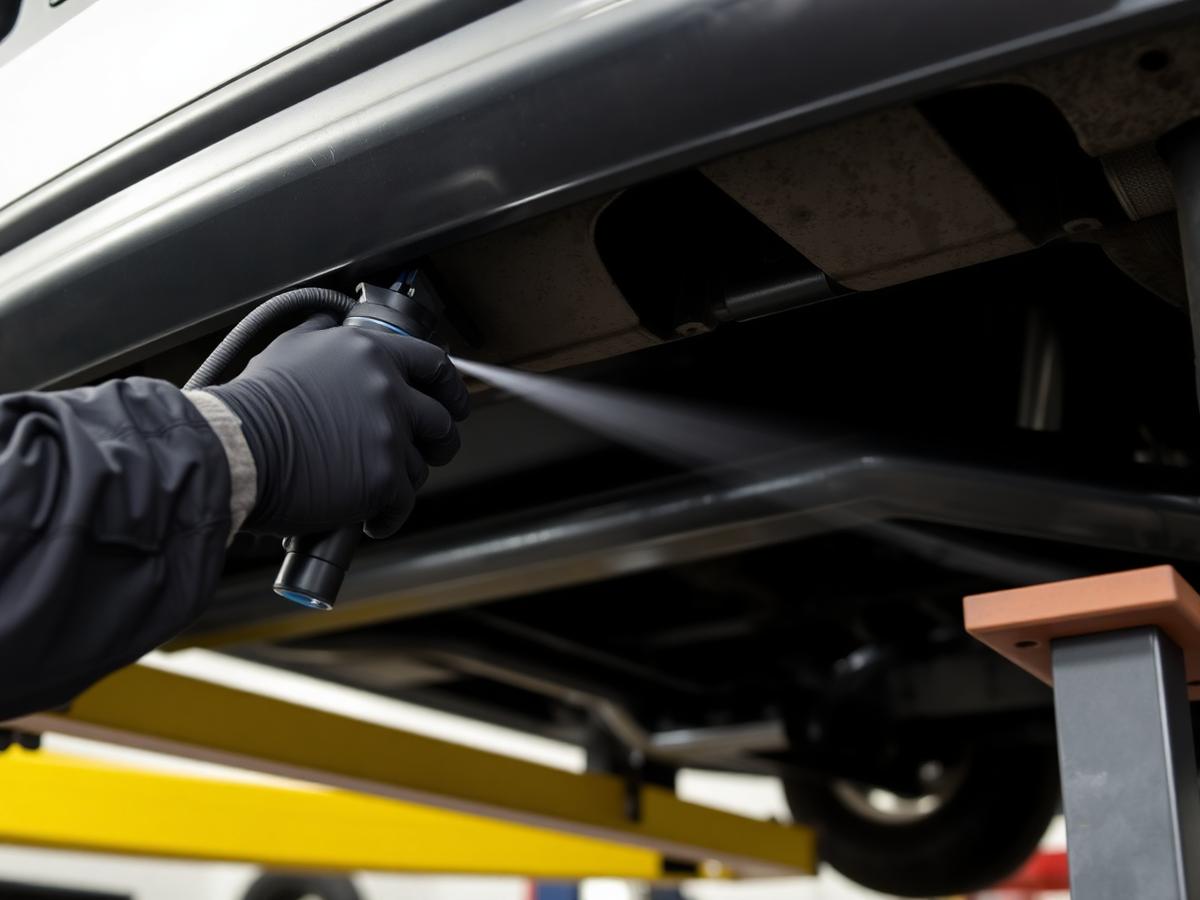
Undercoating puts a barrier between metal and everything that corrodes it: water, salt, and abrasive debris. Different products do that in different ways.
Wax-Based Coatings
Flow into seams and stay somewhat soft, so they self-heal minor damage. They need reapplication on a schedule.
Oil-Based Inhibitors
Creep into tight joints and cavities and displace moisture. Excellent penetration, shortest service life, and they can drip after application.
Rubberized Coatings
Thicker and more abrasion resistant. Applied over poorly prepared or already corroding metal, they can trap moisture and hide problems.
Cavity Protection
Applied inside boxed frame rails, rockers, and other closed sections through access points. This is where corrosion usually starts.
Undercoating is not structural repair
Applying coating over severe corrosion does not restore lost metal or structural strength. It can also seal moisture and scale against the metal and hide the condition from the next person who looks at the vehicle. Coating belongs on sound metal, or on metal that has been properly repaired and prepared first.
The order the work should happen in
- 1
Inspect
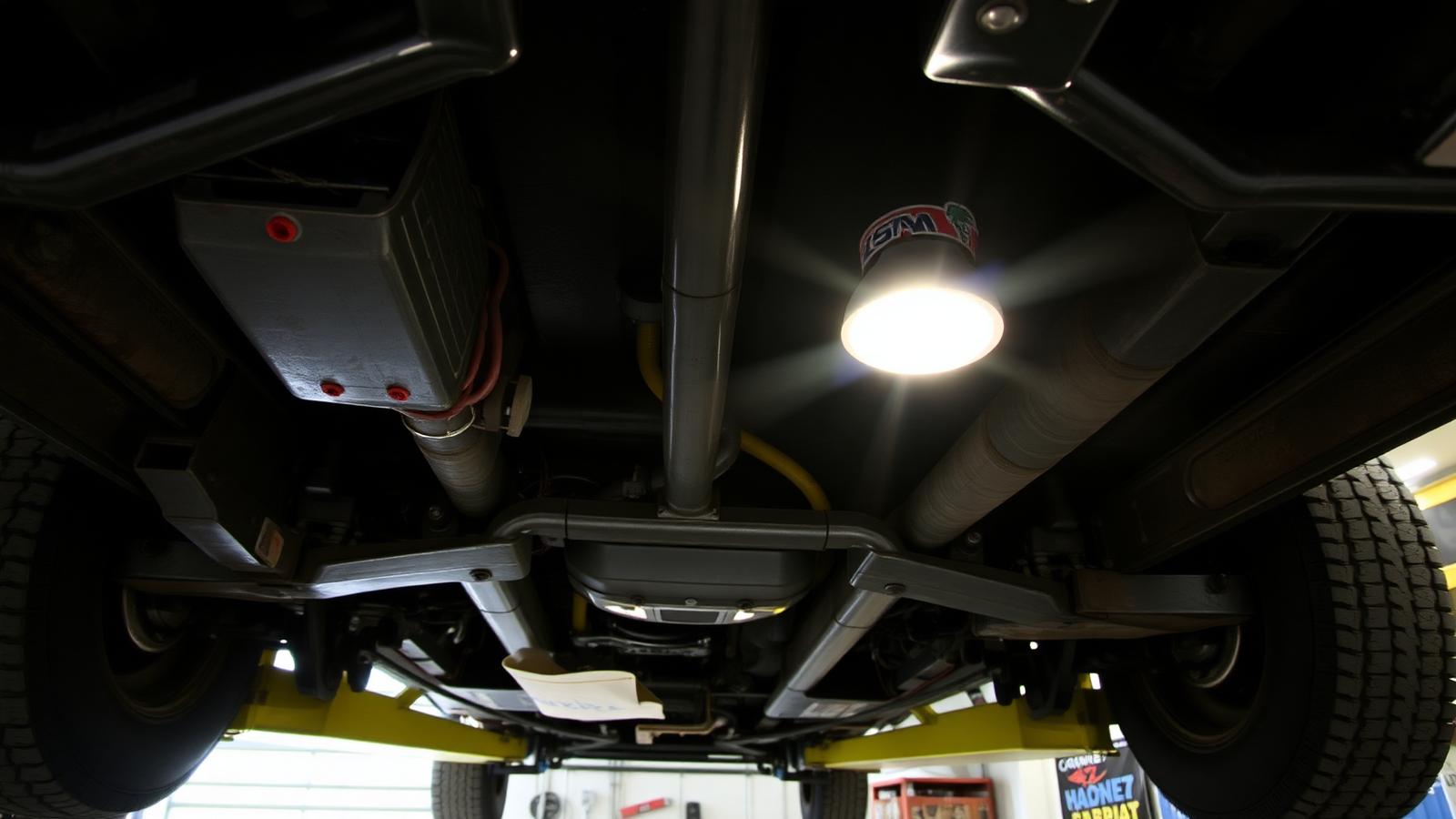
Vehicle on a lift, high-output lighting, full underbody walk with photos.
- 2
Evaluate
Classify what we find: cosmetic, progressing, or structural.
- 3
Prepare
Clean, remove loose scale and debris, and expose true metal condition.
- 4
Repair when appropriate
Address deterioration that warrants and justifies repair.
- 5
Treat
Apply corrosion treatment to prepared surfaces and cavities.
- 6
Protect
Apply the coating system suited to the vehicle and how it is used.
Prevention
Should you undercoat a newer vehicle?
Protecting clean metal is straightforward. Addressing corrosion after it starts is not. If you intend to keep a vehicle for the long term in a coastal climate, prevention is the cheaper path.
- Pickup trucks and body-on-frame SUVs
- Work vehicles and fleet vehicles
- Vehicles you plan to own past the ten-year mark
- Vehicles parked near the oceanfront or the bay
- Vehicles driven north in winter road-salt regions
- Vehicles that regularly see beach access, boat ramps, or standing water
Timing matters more than product choice. A vehicle with a factory-clean underbody is the easiest one to protect, and the protection is most effective before the first winter of salt exposure or the first season of beach and boat ramp driving.
If your vehicle has already seen flood or tidal water, start with our flood and water damage inspection instead. Coating a contaminated underbody locks the problem in.
Before you buy
Buying a used truck or SUV? Look underneath before you buy.
Fresh paint, clean wheels, and a detailed interior tell you nothing about what is under the vehicle. A rust-free-looking truck can have a crossmember you could put a screwdriver through, and undercoating sprayed over old damage looks tidy from three feet away.
What we check on a pre-purchase underbody inspection
- Frame railsFull length, including inside boxed sections where access allows.
- CrossmembersEspecially where mud and debris collect.
- Suspension mounting pointsControl arm mounts, spring perches, strut towers, subframe mounts.
- Body mountsOn body-on-frame vehicles these carry the cab and bed.
- Brake linesCorroded lines are a common find on high-corrosion vehicles.
- Fuel lines and tank strapsBoth live in the same wet, dirty environment.
- Rockers and floor structurePrimary structural areas on unibody vehicles.
- Previous repairsWelds, patches, filler, and fresh coating hiding older work.
- Fluid leaksLeaks tell you about the drivetrain and also about what has been soaking the underbody.
From our shop
Beach Auto & Transmission Repair case studies
Documented examples from vehicles inspected at our Virginia Beach shop. These entries are reserved for real vehicles, real findings, and real outcomes. We do not publish invented examples, so the cards below stay in placeholder form until the documentation is finalized.
Case study 1 (awaiting shop documentation)
- Vehicle year / make / model
- To be supplied by the shop
- Customer concern
- To be supplied by the shop
- What we found
- To be supplied by the shop
- Severity
- To be supplied by the shop
- Why it matters
- To be supplied by the shop
- Options presented
- To be supplied by the shop
- Repair / treatment performed
- To be supplied by the shop
- Final result
- To be supplied by the shop
Photo slots (before / during / after, with caption and alt text)
Case study 2 (awaiting shop documentation)
- Vehicle year / make / model
- To be supplied by the shop
- Customer concern
- To be supplied by the shop
- What we found
- To be supplied by the shop
- Severity
- To be supplied by the shop
- Why it matters
- To be supplied by the shop
- Options presented
- To be supplied by the shop
- Repair / treatment performed
- To be supplied by the shop
- Final result
- To be supplied by the shop
Photo slots (before / during / after, with caption and alt text)
Case study 3 (awaiting shop documentation)
- Vehicle year / make / model
- To be supplied by the shop
- Customer concern
- To be supplied by the shop
- What we found
- To be supplied by the shop
- Severity
- To be supplied by the shop
- Why it matters
- To be supplied by the shop
- Options presented
- To be supplied by the shop
- Repair / treatment performed
- To be supplied by the shop
- Final result
- To be supplied by the shop
Photo slots (before / during / after, with caption and alt text)
Decision framework
What are your options?
After an inspection, every vehicle lands in one of four categories. Which one it lands in depends on the metal, not on what we would like to sell.
Monitor
Light surface corrosion on sound metal. We document the condition with photos, note it in your history, and recheck it at each service so any change is caught early.
Treat and Protect
Early-stage corrosion on metal that is still solid. Clean, prepare, treat the affected areas, and apply an appropriate coating system including cavity protection.
Repair or Restore
Deterioration that has gone past treatment but sits on a vehicle worth the investment. Scope, cost, and realistic outcome are discussed before any work starts.
Stop Investing
Severe structural deterioration where repair is not practical or economically sensible. We will tell you that directly rather than sell you work that does not fix the underlying problem.
Questions we get
Frame rust and undercoating FAQ
Concerned about what is under your vehicle?
If you have discovered rust, recently purchased a used vehicle, experienced flood exposure, or simply want to protect a vehicle you plan to keep long-term, start with an inspection.
We will document what we find, explain the severity, and discuss realistic options.